For those looking for a Japanese kitchen knife in Osaka.
・Something to bring home as a keepsake of your trip to Japan.
・A souvenir for family or friends who love cooking.
・A Japanese-made kitchen knife that's easy to use at home.
・Wanting to understand the difference between a Santoku, a Gyuto, and a Petty knife before choosing.
・Wanting to hold a knife and check the cutting feel before deciding.
If any of this sounds like you, we recommend visiting Tamaiichi Doi Ceramic Shop, located in Tenjinbashisuji Shopping Street in Osaka.
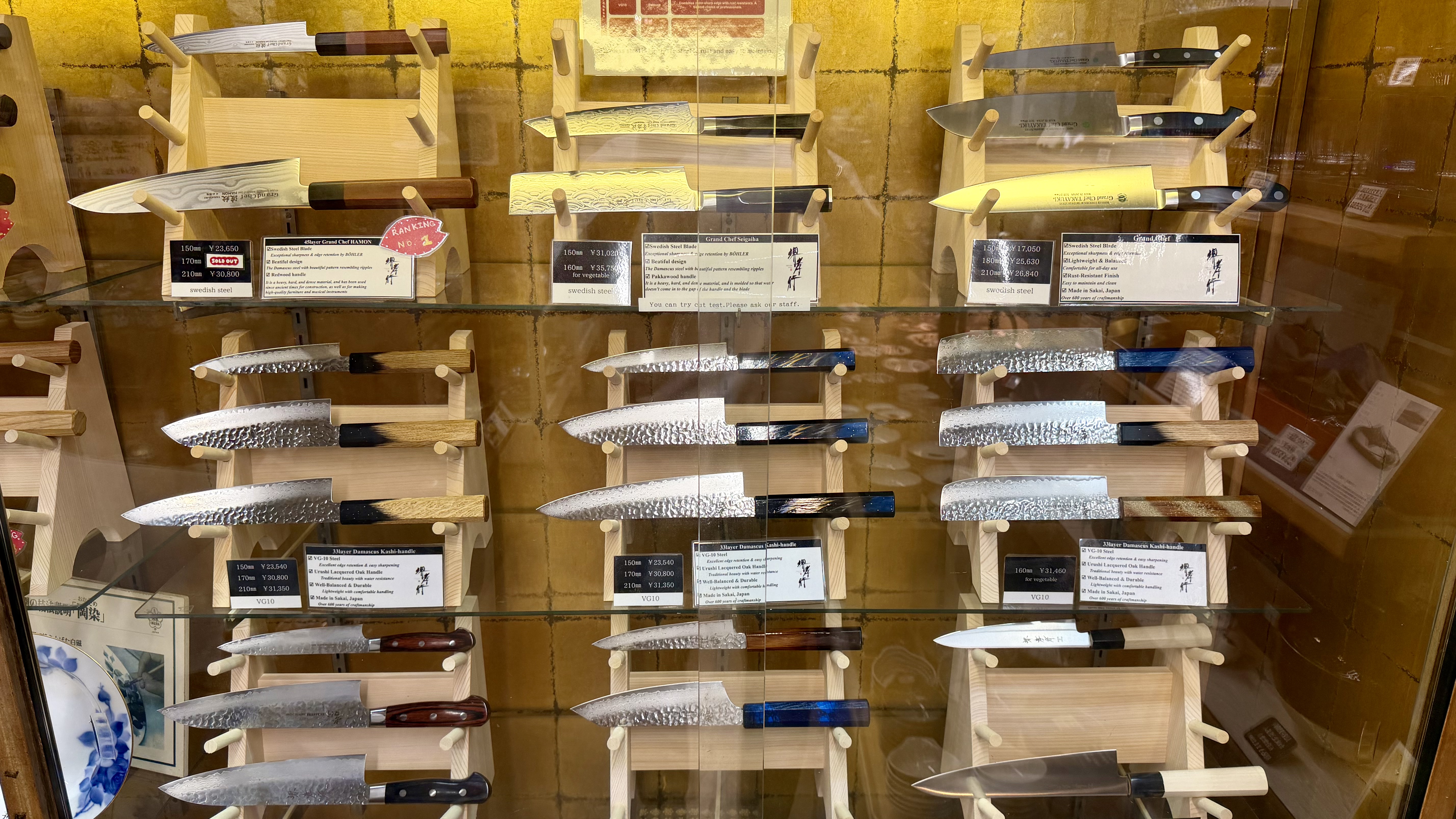
At Doi Ceramic Shop, you'll find kitchen knives centered on Sakai Takayuki, along with knives from Sakai, Seki, and Tsubame — regions in Japan well known for bladesmithing and metalwork.
The main focus is on stainless steel kitchen knives that are easy to use every day. The lineup centers on Gyuto, Santoku, and Petty knives, with a smaller selection of Deba and Yanagiba knives also available.
We also carry many Damascus-pattern kitchen knives, with a beautiful wave-like pattern on the blade surface. Damascus is not a type of steel — it refers to the pattern and finish that appears on the surface of the blade. With its striking appearance and sense of craftsmanship, it's a popular choice as a gift for cooking enthusiasts or as a keepsake of a trip to Japan.
We also carry MAC Morning Knives and peeling knives, which are easy choices as souvenirs, as well as fruit knives with a sheath, and sharpening stones and knife sharpeners for maintenance.
A kitchen knife is a tool that's difficult to choose from photos or specifications alone. Blade length, weight, handle shape, balance in the hand, and cutting feel are things you often only understand once you try holding one.
At Doi Ceramic Shop, you can compare Japanese-style and Western-style handles and hold the actual knives before choosing. Since you can also test the cutting feel in store, it's easier to find the one that suits you.
This article introduces how to choose a Japanese kitchen knife, the knives available at Doi Ceramic Shop, and important notes for travelers bringing a knife home, for anyone looking for a Japanese kitchen knife in Osaka.
For Those Looking for a Japanese Kitchen Knife in Osaka
Many visitors exploring Osaka look for a distinctly Japanese souvenir.
Alongside tableware, chopsticks, and matcha bowls, Japanese kitchen knives are especially popular with those who love cooking.
A Japanese kitchen knife is a practical tool for everyday cooking, and it's also chosen as a keepsake of a trip or as a gift.
It's an especially appealing choice for those who love cooking, cook often at home, or are looking for quality kitchen tools.
That said, a knife is a difficult item to choose based on appearance alone.
Even knives that look similar can feel quite different in weight and balance once you actually hold them. The shape of the handle changes how it feels in your hand, and the blade material affects sharpness, edge retention, and how easy it is to maintain.
On top of that, some knives — like those with a Damascus pattern — are chosen for their beauty and sense of something special.
For anyone choosing a Japanese kitchen knife for the first time, it can be hard to know where to start.
At Doi Ceramic Shop, you can hold and compare knives in person, with a focus on everyday options like Gyuto, Santoku, and Petty knives.
Since you can test the cutting feel in store, even first-time buyers can choose with a clear sense of how the knife will perform.
Why Japanese Kitchen Knives Are Popular with Cooking Enthusiasts
Japanese kitchen knives are chosen by cooking enthusiasts who value sharpness and ease of use.
A knife that cuts through ingredients smoothly makes cooking that much more enjoyable.
Finely chopping vegetables.
Neatly cutting meat.
Peeling fruit.
Slicing sashimi beautifully.
The right knife depends on what you're cooking.
Japanese kitchen knives come in several types suited to different purposes, including Santoku, Gyuto, Petty, Deba, and Yanagiba knives.
A Santoku knife for those looking for something versatile at home.
A Gyuto knife for those cutting meat or larger ingredients.
A Petty knife for those cutting fruit or smaller ingredients.
A Deba knife for those preparing fish.
A Yanagiba knife for those slicing sashimi neatly.
Being able to choose according to your own cooking style is part of the appeal of Japanese kitchen knives.
Doi Ceramic Shop mainly carries stainless steel kitchen knives. Stainless steel resists rust and is easy to maintain day to day, making it a manageable material whether you're buying your first Japanese knife or plan to bring one home to use abroad.
Damascus-pattern knives are also popular, with a beautiful wave-like character on the blade that makes them enjoyable to look at as well as use. Practical yet distinctive, they're an easy choice for a special gift or a keepsake of your trip.
Choosing with sharpness, ease of maintenance, appearance, and how a knife feels in your hand all in mind makes it easier to find one you'll want to use for years to come.
Points to Consider When Choosing a Knife
When choosing a kitchen knife, it helps to look beyond appearance and brand, and consider how you'll use it, the type of knife, the blade material, the handle shape, and how it feels in your hand.
Here are some points to help even first-time buyers choose with confidence.
Choose by Purpose
The first thing to consider is what kind of cooking you'll use the knife for.
If you want something versatile for cutting meat, fish, and vegetables in everyday cooking, a Santoku knife is an easy choice. It handles a wide range of ingredients well and is a popular option for home use.
If you often cut meat or larger ingredients, a Gyuto knife is a great choice. Since it feels similar to a Western chef's knife, it's an easy fit for anyone already used to Western-style kitchen knives.
If you'd like something for fruit, small vegetables, or detailed work, a Petty knife is convenient. Its compact size makes it an easy choice as a gift for cooking enthusiasts or as a travel souvenir.
For preparing fish, a Deba knife is well suited; for slicing sashimi neatly, a Yanagiba knife is the better choice. Since Deba and Yanagiba knives have a clear, specific purpose, it's worth thinking about the kind of cooking you usually do before choosing one.
For those who'd like an easy souvenir choice, a MAC Morning Knife, a peeling knife, or a fruit knife with a sheath are also good options. Compact and easy to use, they also make a nice small gift for someone who loves cooking.
Choose by Knife Type
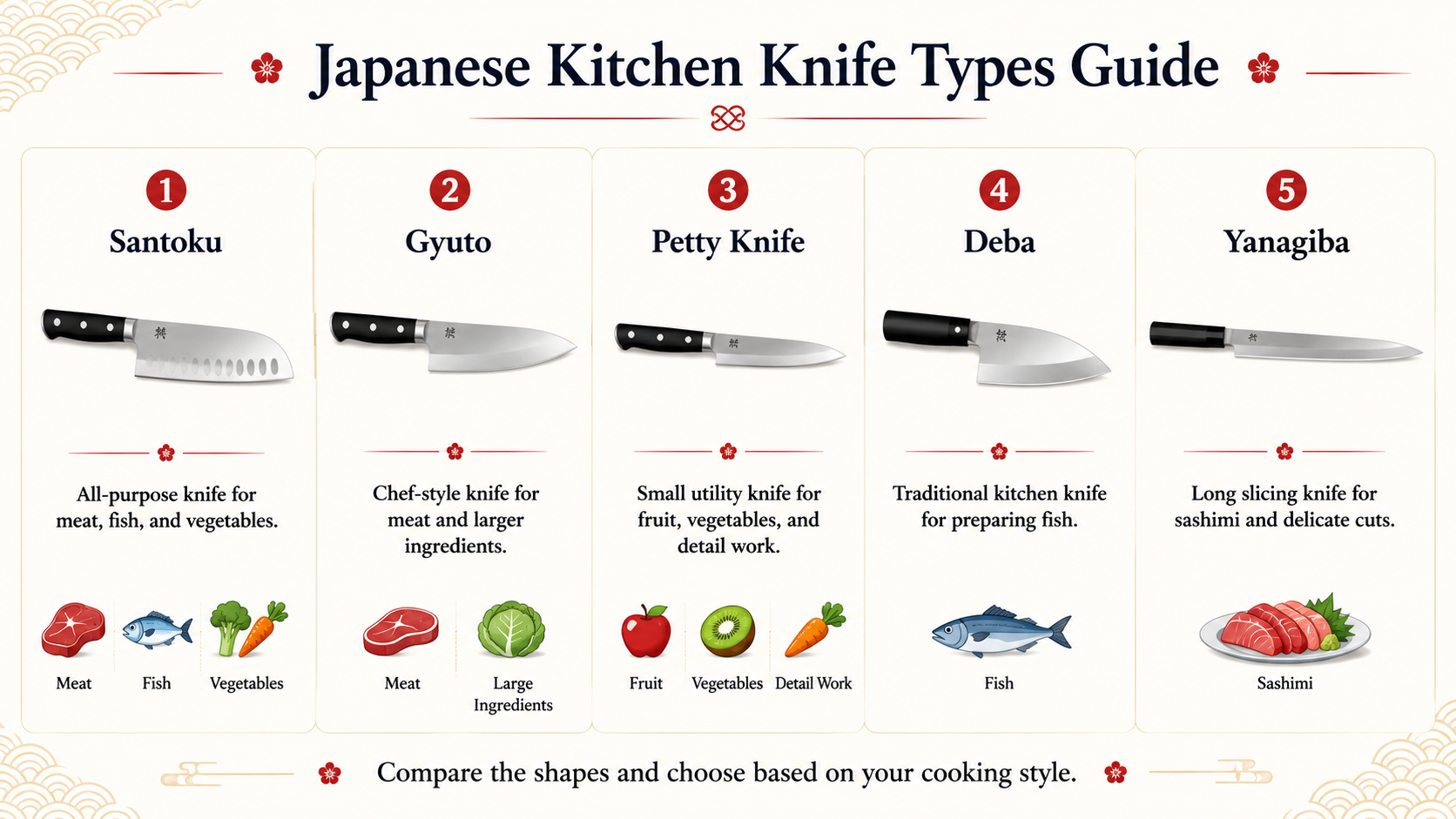
Each type of knife has its own strengths.
The Santoku knife is versatile for cutting meat, fish, and vegetables. It's an easy choice for home use and a great option for anyone buying their first Japanese kitchen knife.
The Gyuto knife is well suited to cutting meat and larger ingredients. Many come with a longer blade, making it a good fit for those who cook often or are already comfortable using a kitchen knife.
The Petty knife is suited to fruit, vegetables, small ingredients, and detailed work. Light and easy to handle, it pairs conveniently with a Santoku or Gyuto knife.
The Deba knife is used for preparing fish. Its thick blade suits those who cook fish often.
The Yanagiba knife is used for slicing sashimi neatly. It's chosen by those interested in Japanese cuisine or who want to cut sashimi beautifully.
When choosing a knife type, it helps to think about what you'll actually use it for.
Do you want something versatile for everyday cooking?
Do you want to cut fruit or small ingredients?
Do you want something for preparing fish?
Are you choosing a gift for someone who loves cooking?
Once your purpose is clear, it becomes much easier to find the knife that suits you.
Choose by Blade Material and Steel
The blade material and steel type also matter when choosing a kitchen knife.
Even among stainless steel knives, sharpness, hardness, edge retention, and ease of maintenance vary by steel type.
Doi Ceramic Shop mainly carries stainless steel kitchen knives that are easy to handle, making the lineup a good fit whether you're choosing your first Japanese knife or plan to use one at home abroad.
The main steel types include Swedish steel, VG10, AUS10, INOX stainless steel, and molybdenum stainless steel.
Swedish steel is a good choice for those who value durability and sharpness. It offers a solid, substantial feel and suits anyone looking for a knife they can use for years to come.
VG10 offers a good balance of sharpness and rust resistance. It's an easy choice for home use or as a gift for a cooking enthusiast.
AUS10 balances hardness, sharpness, and ease of use, making it well suited to everyday cooking. It's also an easy option to compare for first-time buyers of a Japanese knife.
INOX stainless steel resists rust and is easy to maintain. Many INOX knives are also light and easy to handle, suiting anyone who wants to use a knife casually in everyday cooking.
Stainless knives made with molybdenum are a good choice for those who value rust resistance and ease of handling. They're easy to use at home and suit anyone concerned about maintenance.
The Sakai Takayuki knives that Doi Ceramic Shop mainly carries are centered on Swedish steel, VG10, and INOX stainless steel.
Steel names alone can sound complicated, but in practice, it's more about matching a knife to your own priorities — sharpness, ease of maintenance, or casual everyday use.
In the shop, you can compare not just the steel itself, but also weight, grip, and cutting feel.
Choose by Blade Design and Pattern
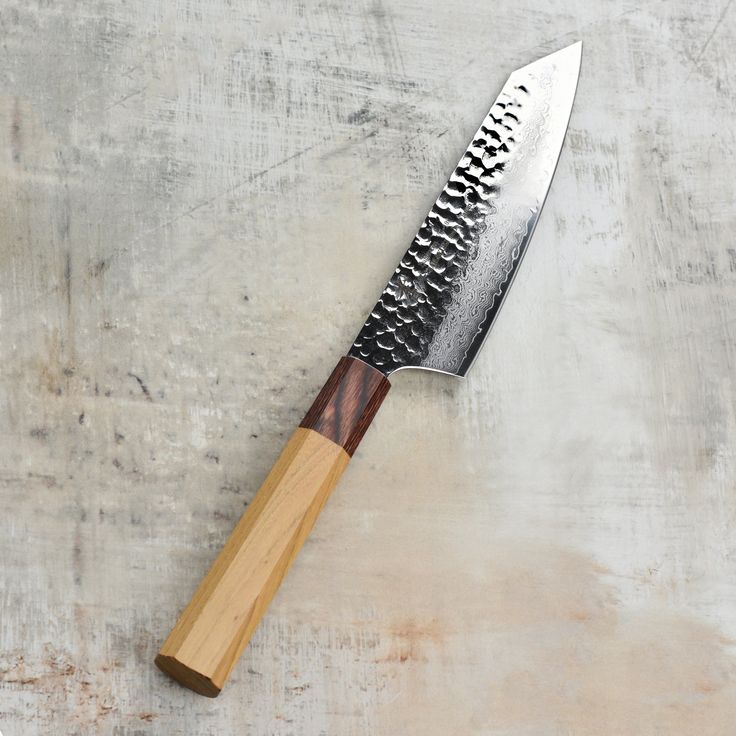
A knife can also be chosen for the simple pleasure of its appearance, beyond steel type and purpose.
Especially popular are Damascus-pattern knives.
Damascus is not a type of steel — it's a term that usually refers to the wave-like pattern that appears on the blade surface, or the beautiful finish created by layered steel.
With its distinctive pattern, a Damascus-pattern knife has a striking, high-end appearance and is often chosen as a gift for a cooking enthusiast or as a keepsake of a trip to Japan.
Doi Ceramic Shop carries many Damascus-pattern knives, including Santoku, Gyuto, and Petty knives, so you can enjoy both the practical purpose and the beauty of the pattern when choosing.
When choosing a Damascus-pattern knife, we also recommend checking the weight, handle shape, sharpness, and ease of maintenance in person, not just the pattern.
A knife you pick up because it catches your eye can easily become a favorite you rely on in the kitchen for years.
Choose by Handle Shape
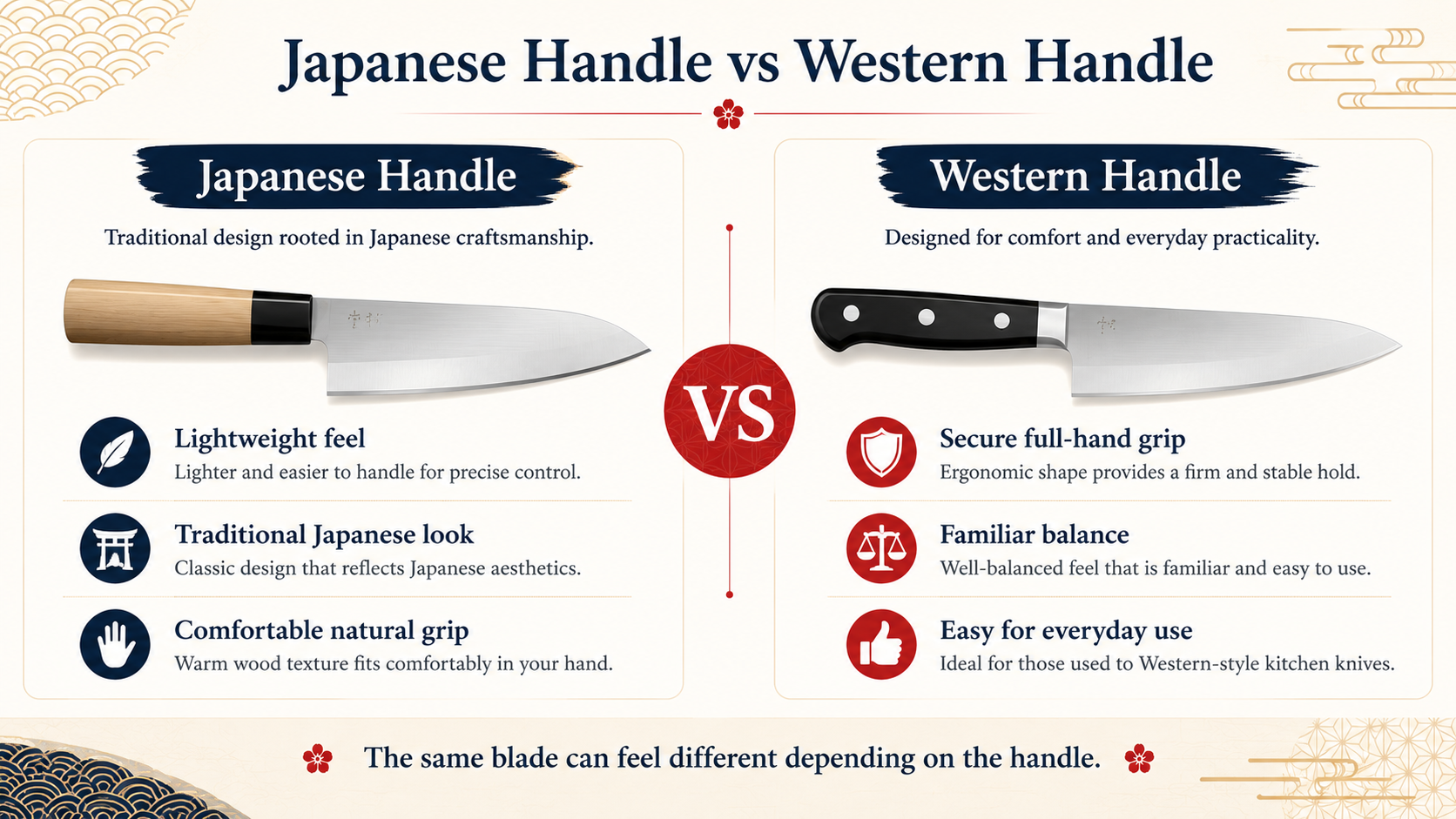
The handle shape matters as much as the blade itself.
At Doi Ceramic Shop, you can compare knives with a Japanese-style handle and a Western-style handle.
A Japanese-style handle often feels light in the hand, with a comfortable, natural grip. Its distinctly Japanese look also makes it popular with those specifically looking for a Japanese kitchen knife.
A Western-style handle offers a firm, secure grip and feels close to a typical kitchen knife. For visitors from abroad, this can feel like a familiar, comfortable grip.
Even for knives with the same blade length, the handle shape changes how the weight and balance feel in your hand.
Rather than choosing by appearance alone, we recommend holding the knife in person to check whether it feels natural in your hand.
Test the Cutting Feel in Person
A kitchen knife is a tool that's difficult to choose based on specifications alone.
Weight, balance, grip, blade length, and sharpness are things you often only understand once you hold a knife in your hands.
At Doi Ceramic Shop, you can hold the actual knives while choosing. You can also test the cutting feel in store.
Trying the knife on something gives you a clear sense of how the blade cuts, how it feels in your hand, and how easy it is to handle.
For anyone choosing a Japanese kitchen knife for the first time, being able to test it is an important part of choosing with confidence.
Main Kitchen Knives Available at Doi Ceramic Shop
Doi Ceramic Shop carries kitchen knives that are easy to use every day, centered on Gyuto, Santoku, and Petty knives.
A smaller selection of Deba and Yanagiba knives is also available.
We also carry MAC Morning Knives, peeling knives, and fruit knives with a sheath, which are easy choices as gifts for cooking enthusiasts.
Santoku Knife
The Santoku knife is versatile, cutting meat, fish, and vegetables with ease.
Well loved as an easy-to-use knife in Japanese households, it's a great choice for anyone buying their first Japanese kitchen knife.
If you're not sure where to start, the Santoku knife is a great first option to consider.
Handling a wide range of ingredients with a single blade, it fits naturally into everyday cooking.
Gyuto Knife
The Gyuto knife is well suited to cutting meat and larger ingredients.
Since it feels close to a Western chef's knife, it's an easy choice for anyone already used to Western-style kitchen knives.
Useful for vegetables and fish as well as meat, it's a good option for those who cook often or want something a bit more serious.
Since the feel varies with blade length and weight, holding one in person makes it easier to find the right fit.
Petty Knife
The Petty knife is well suited to fruit, vegetables, small ingredients, and detailed work.
Light and easy to handle, it's convenient for small tasks in the kitchen.
Many people use it alongside a Santoku or Gyuto knife, and having one on hand expands what you can easily prepare.
Its compact size also makes it an easy choice as a travel souvenir or a gift for a cooking enthusiast.
Deba Knife and Yanagiba Knife
Doi Ceramic Shop carries a smaller selection of Deba and Yanagiba knives.
The Deba knife is used for preparing fish. Its thick blade suits anyone who cooks fish often.
The Yanagiba knife is used for slicing sashimi neatly. It's a good choice for anyone interested in Japanese cuisine or who wants to cut sashimi beautifully.
Compared to a Santoku or Gyuto knife, Deba and Yanagiba knives have a more specific purpose.
If you're interested, please ask in store about their intended use and current availability.
MAC Morning Knife and Peeling Knife
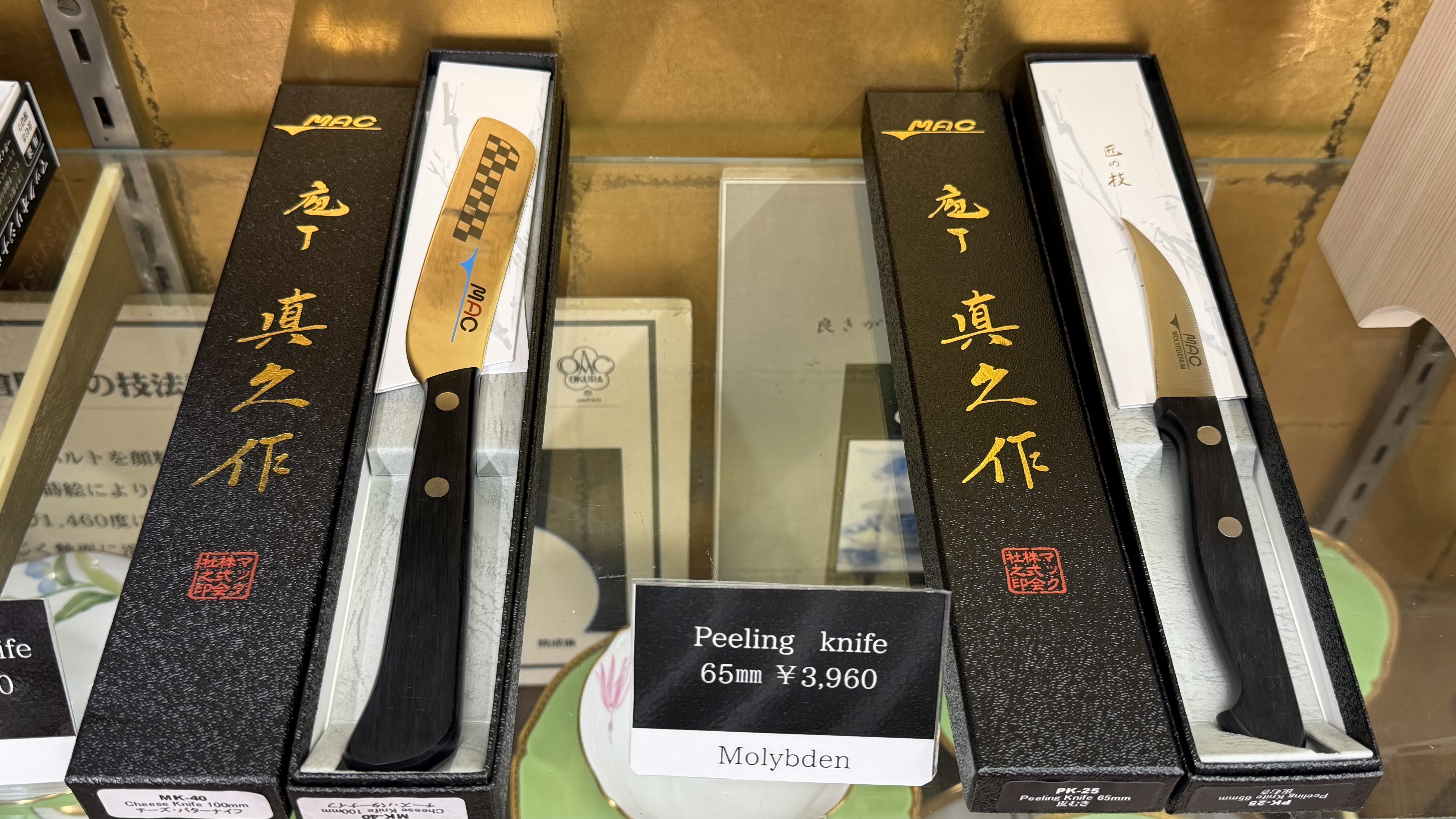
Beyond full-size kitchen knives, we also recommend the MAC Morning Knife and peeling knife for anyone looking for an easy souvenir.
The MAC Morning Knife is convenient for bread, fruit, and light cooking tasks. Easy to use casually day to day, it also makes a nice gift for a cooking enthusiast.
The peeling knife is handy for peeling fruit and vegetables and cutting small ingredients.
Both are compact and easy to handle, making them a simpler choice than a full-size kitchen knife.
They're also a great option for anyone looking for a Japanese-made kitchen tool as a souvenir.
Fruit Knife with a Sheath
A fruit knife with a sheath is convenient for cutting fruit and small ingredients.
Since it comes with a sheath, it's easy to store and helps protect the blade.
It's an easy choice for anyone who doesn't need a full-size kitchen knife, or who's looking for a lighter souvenir.
If purchasing one while traveling, be sure to pack it safely and pay attention to how you bring it home.
What Makes Choosing a Knife at Doi Ceramic Shop Special
What makes choosing a kitchen knife at Doi Ceramic Shop special is being able to hold the actual knives and compare them according to your purpose and taste.
A knife is a tool whose usability is difficult to judge from appearance alone.
That's exactly why being able to check the weight and grip in store, and test the cutting feel when needed, brings real peace of mind.
Knives from Sakai Takayuki, Sakai, Seki, and Tsubame
Doi Ceramic Shop mainly carries Sakai Takayuki kitchen knives.
We also carry knives from Sakai, Seki, and Tsubame — regions in Japan well known for bladesmithing and metalwork.
For anyone looking for a Japanese kitchen knife, being able to compare different regions and makers is a real advantage.
It's also an easy item to recommend to visitors as a practical, distinctly Japanese souvenir.
A Range of Stainless Steel Types to Suit Your Needs
Doi Ceramic Shop carries knives made with Swedish steel, VG10, AUS10, INOX stainless steel, and molybdenum stainless steel, so you can choose according to your purpose and preference.
The Sakai Takayuki knives that make up our main lineup are centered on Swedish steel, VG10, and INOX stainless steel.
Whether you value sharpness, rust resistance, or ease of handling in everyday cooking, you can choose according to your own cooking style.
Rather than choosing by steel name alone, we recommend also considering weight, balance, and ease of maintenance once you hold the knife in person.
Many Damascus-Pattern Knives Available
Doi Ceramic Shop carries many Damascus-pattern knives.
The Damascus pattern is a finish that gives the blade a beautiful, wave-like character. Rather than a type of steel, it's an element to enjoy for its appearance and the unique pattern created by layered steel.
It's a popular choice as a gift for a cooking enthusiast, a keepsake of a trip to Japan, or simply for anyone who cares about the look of their knife.
Seeing one in person reveals the way the blade catches the light and the character of the pattern — details that are hard to capture in photos.
Compare Japanese-Style and Western-Style Handles
At Doi Ceramic Shop, you can compare knives with a Japanese-style handle and a Western-style handle.
A Japanese-style handle often has a distinctly Japanese look and a light, comfortable feel in the hand.
A Western-style handle offers a firm, secure grip that feels close to a typical kitchen knife.
Even with the same type of knife, the handle changes how it feels once you hold it.
The right handle varies from person to person, depending on hand size, grip style, and cooking habits.
Holding and comparing them in person makes it easier to find the one that suits you.
Test the Cutting Feel
Sharpness is one of the most important factors when choosing a knife.
At Doi Ceramic Shop, you can test the cutting feel of a knife in person.
Trying the knife on something lets you check how the blade cuts, how it feels in your hand, and how easy it is to handle.
For anyone choosing a Japanese kitchen knife for the first time, being able to test it in person offers real peace of mind.
Please check the feel for yourself in store — something appearance and descriptions alone can't fully convey.
Sharpening Stones, Knife Sharpeners, and Other Maintenance Tools
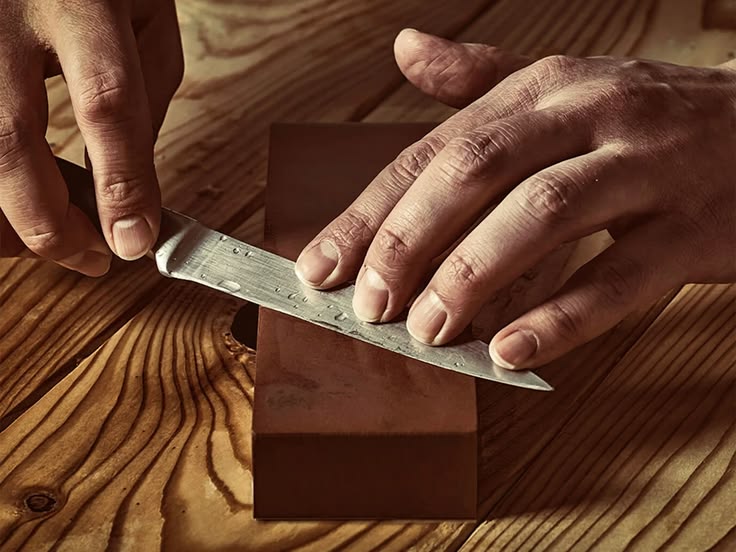
Buying a knife isn't the end of the story.
Regular care and maintenance matter if you want to use it for years to come.
Doi Ceramic Shop carries not just knives, but also maintenance tools such as sharpening stones and knife sharpeners.
A sharpening stone for those who want thorough, hands-on maintenance.
A knife sharpener for those who'd prefer something simpler and quicker.
You can choose based on your own cooking style and comfort level with maintenance.
Picking up maintenance tools alongside your knife helps you keep enjoying it for a long time after your purchase.
Notes for Travelers Bringing a Japanese Kitchen Knife Home

If you purchase a Japanese kitchen knife while traveling, it's important to be aware of how to bring it home by air.
Because a kitchen knife is a bladed item, it cannot be carried in cabin baggage. Japan's Ministry of Land, Infrastructure, Transport and Tourism notes that certain bladed items are not permitted in carry-on baggage, and Japan's official Government Public Relations Online explains that while blades cannot be brought into the cabin, they can generally be placed in checked baggage.
Any knife you purchase needs to be packed in checked luggage, such as a suitcase, to bring it home.
When you do, it's important to protect the blade safely and make sure it won't shift around inside your luggage.
Before purchasing, it's worth confirming the following points:
Pack it in checked luggage, not carry-on baggage
Make sure the blade is safely protected
Check whether it fits in your suitcase
Check the import rules for your destination country or region
Check the regulations of the airline you're using
Rules can vary by country and airline. Before heading home, it's a good idea to confirm the rules for both your airline and your destination.
At Doi Ceramic Shop, we're happy to advise on packing so travelers can bring their knife home easily.
We Also Welcome Inquiries from Hotel Guests and Guides
In addition to regular in-store shopping, Doi Ceramic Shop is also developing guidance on Japanese kitchen knives and kitchen tools that's easy for hotel guests and guides to recommend.
A kitchen knife is an appealing item for travelers who love cooking, chefs, and anyone interested in food culture.
The differences between a Santoku, Gyuto, and Petty knife.
The ease of use of stainless steel knives.
The differences between steel types like Swedish steel, VG10, and INOX.
The beauty of the Damascus pattern.
The difference between Japanese-style and Western-style handles.
Testing the cutting feel in person.
What travelers should know when bringing a knife home.
We can walk guests through these topics in store, based on their interests and available time.
If you are considering a small-group visit, a stop as part of a guided tour, or an introduction for hotel guests, please contact us through our inquiry form to discuss the details.
This is not currently offered as an official, ongoing tour, but we're happy to work together with you on a format you can confidently introduce to your guests.
Looking for a Japanese Kitchen Knife in Osaka? Visit Doi Ceramic Shop
If you're looking for a Japanese kitchen knife in Osaka, we'd love for you to visit Doi Ceramic Shop in Tenjinbashisuji Shopping Street.
Doi Ceramic Shop carries knives centered on Sakai Takayuki, along with knives from Sakai, Seki, and Tsubame — regions in Japan well known for bladesmithing and metalwork.
The lineup centers on Gyuto, Santoku, and Petty knives, with a smaller selection of Deba and Yanagiba knives also available.
We also carry MAC Morning Knives, peeling knives, and fruit knives with a sheath, which make for easy souvenirs.
Steel options include Swedish steel, VG10, AUS10, INOX stainless steel, and molybdenum stainless steel, so you can choose according to your purpose and preference. Our main Sakai Takayuki lineup is centered on Swedish steel, VG10, and INOX stainless steel.
We also carry many Damascus-pattern knives, with a beautiful wave-like pattern on the blade surface — a great option for anyone who values both practicality and a distinctive look.
Being able to compare Japanese-style and Western-style handles, hold the knives in person, and test the cutting feel is part of what makes choosing a knife at Doi Ceramic Shop special.
We also carry maintenance items like sharpening stones and knife sharpeners, making it a great choice for anyone who wants to use their knife for years to come.
・As a gift for someone who loves cooking.
・As a keepsake of your trip to Japan.
・As an everyday knife for your own kitchen.
・As a special gift for a professional or serious home cook.
Please enjoy the experience of discovering a distinctly Japanese tool during your time sightseeing in Osaka.